While Paola and I were up in Syracuse back in July, I found a Pentax K1000 SE SLR at an antique store in Skaneateles. I’d wanted a SLR for a while, particularly a K1000, as it’s known as a classic manual-everything camera. This particular model stuck out right away, as it had brown leatherette trim and was from an era where most cameras were chrome and black.
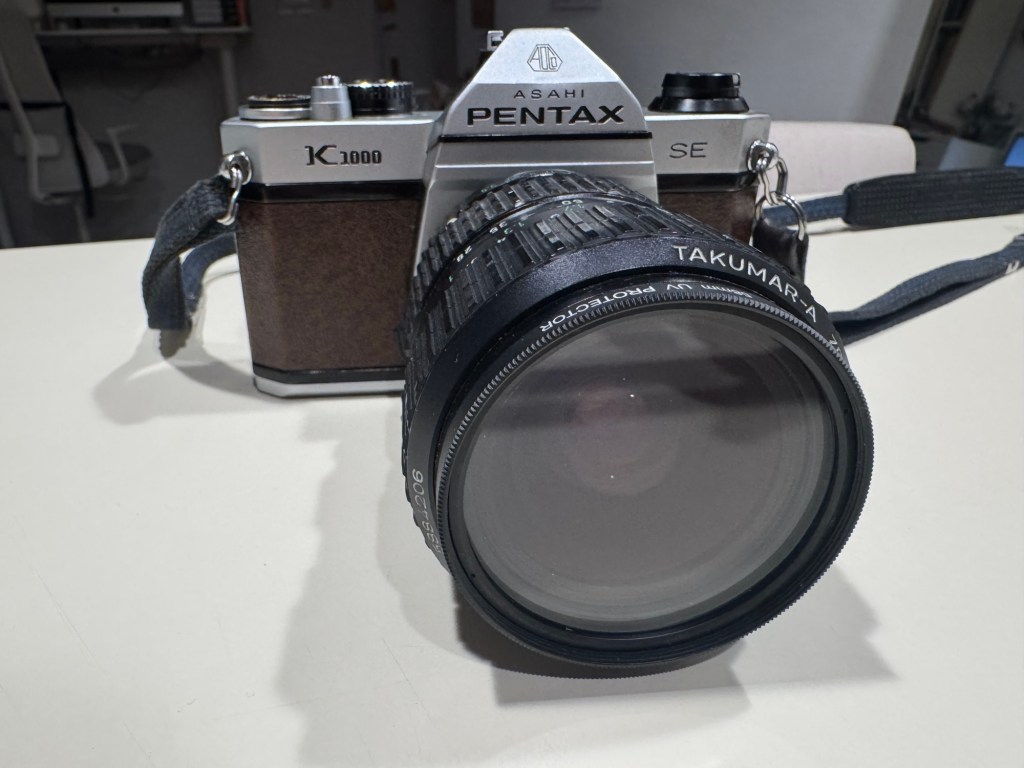
Turns out, the SE (Special Edition) model has both a split image and a microprism focusing screen and this particular one was an early model and thus possibly still made in Japan. To round out my good luck, the camera was previously owned by a professional photographer and the light meter still worked, score! So I bought it and took it home.
Film
I generally travel with a film camera, a digital, and an extra roll of film, which happened to be the new Harman Phoenix II ISO 200 color film. Back in 2023, Harman developed Phoenix, a new color film which would be progressively improved, resulting in the Phoenix II release this year (2025). I bought a roll to give it a try and to support the project. This was the roll that made its way into my new camera.
Exposure
Previous to this camera, I mostly used my Ricoh 500G and a light meter app on my iPhone, which has been useful for spot metering and as a stand-in to the 500G’s broken light meter. With this new K1000, I finally had a working light meter, though I first checked it against the light meter app, which suggested the camera was overexposing by one stop. The camera doesn’t have exposure compensation, so I simply upped the ISO from 200 to 400. This seemed to align things, but I did go back to my iPhone app from time to time for tricky exposures.
This past week, I received the film back from the lab and had mixed results. There were some great shots, particularly at sunset, and some that were grainy and underexposed. Here’s my take
The Good
This film captures contrast nicely. My favorite shots from the roll included sky and water or buildings falling into shadow at sunset.

Here’s another shot that turned out great in my opinion. It really captures the feel of this falling-apart streetcar at sunset:
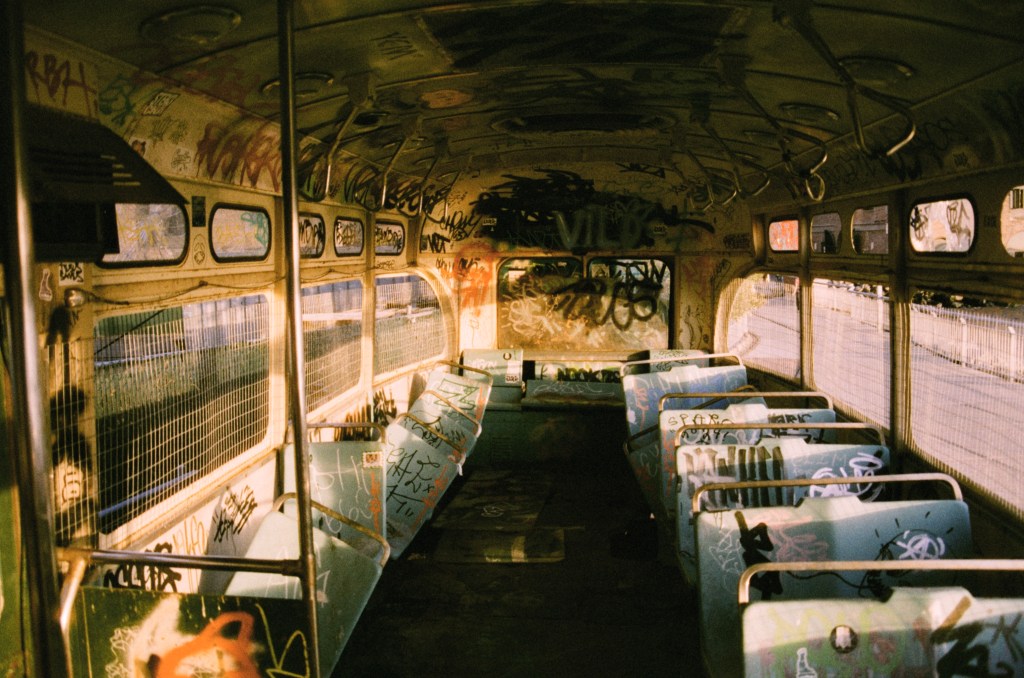
All of my most vivid and true-to-life shots came in the waning hours of the day.
The Bad
This is a grainy film, particularly when comparing against the old standby, Kodak Gold 200. The grain shows up, together with a greenish cast, particularly in the shadows. Greenish shadows have been a nemesis of mine for years, though it may be due to the scanner in use at most of the area labs and their flat scan and minimal color correction approach more than the film itself. Here is an example of those greenish shadows:

It has some difficulty handling whites in high contrast scenes and it has a yellowish halation, as noted by Blue Moon Camera in their review. Here’s an example of a shot with those characteristics that didn’t turn out quite to my liking:
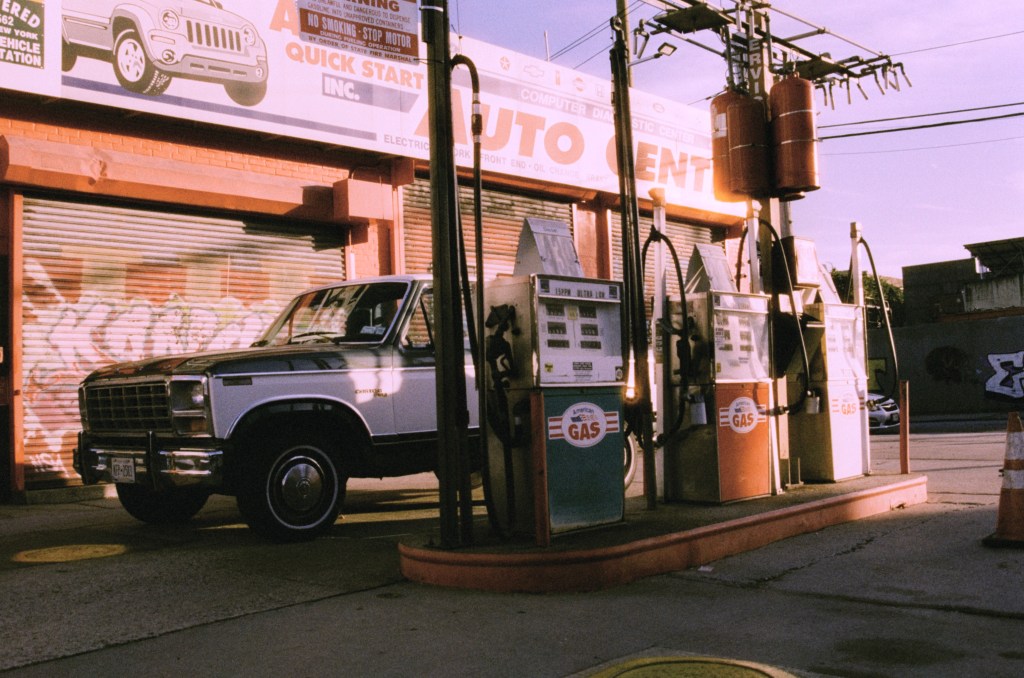
Lastly, many of my shots ended up a bit underexposed, particularly in challenging lighting. Whether that was me relying on the light meter in tricky situations, my adjustment for the camera overexposing, or a feature of the film itself, I couldn’t quite say.
Conclusions
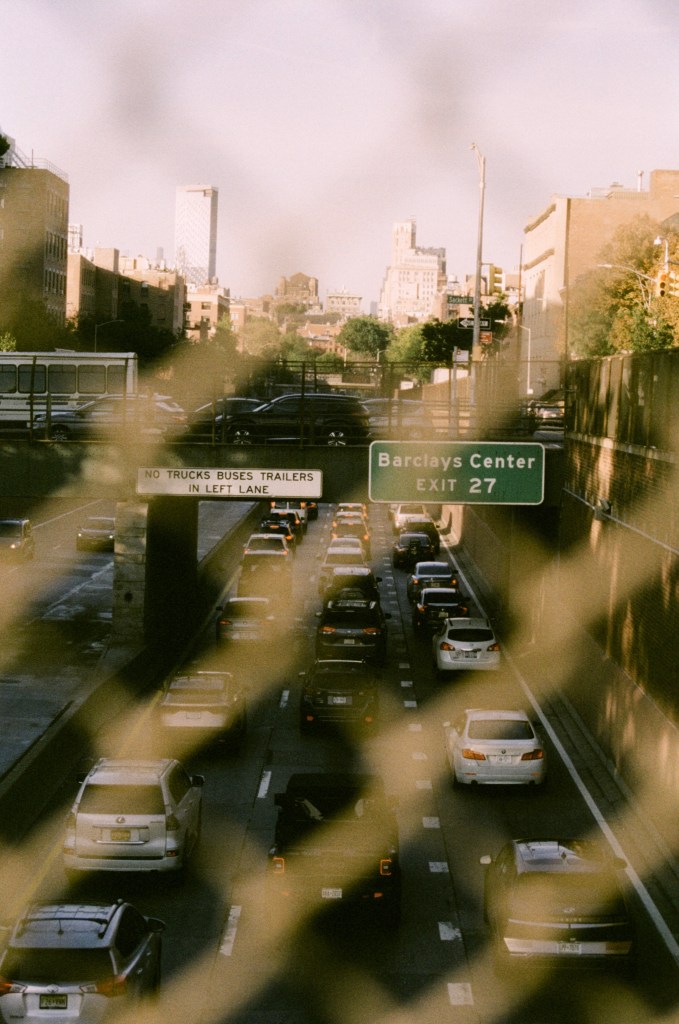
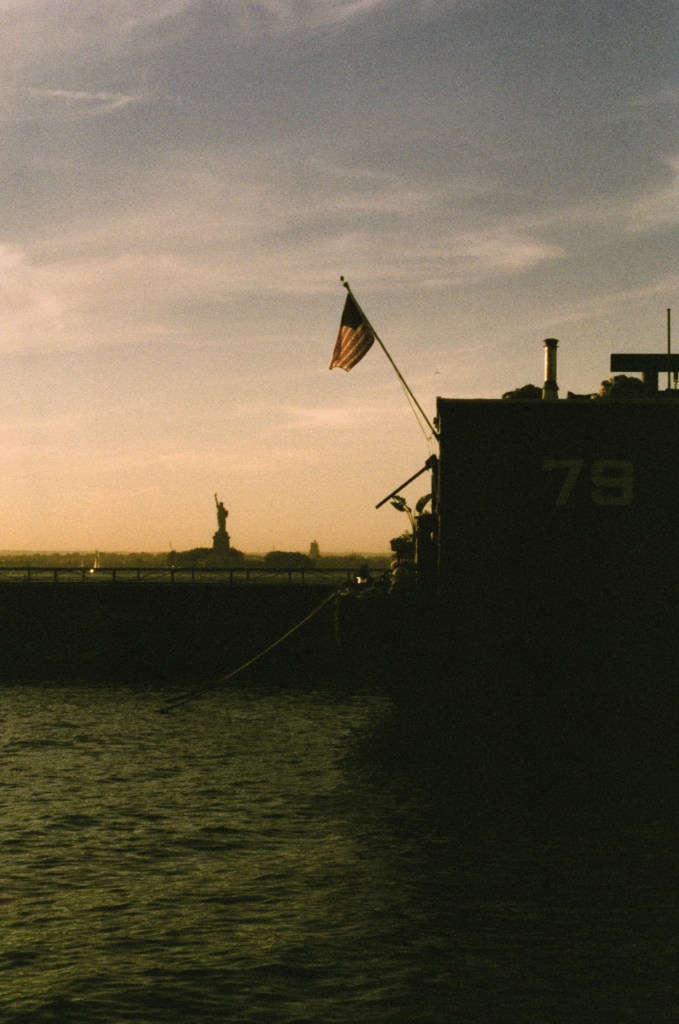
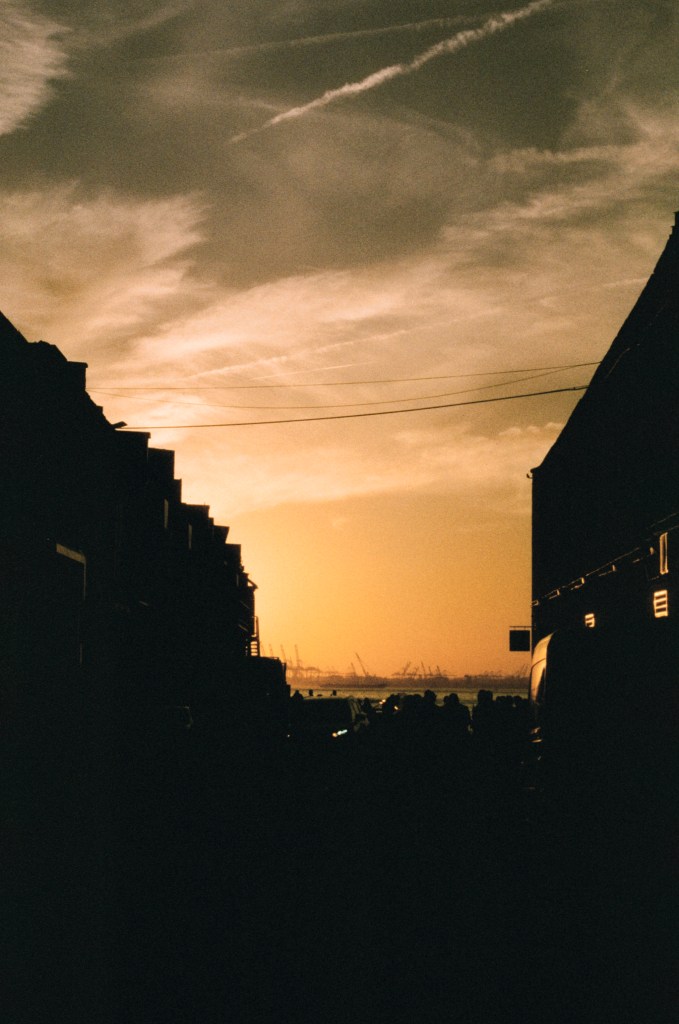
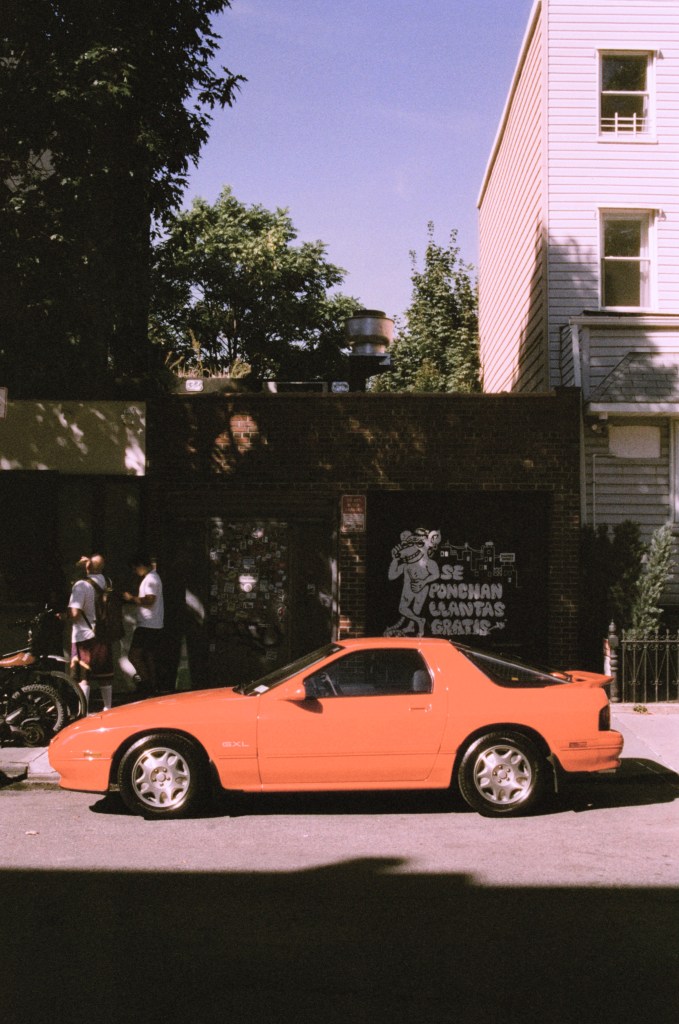
It’s not often that you’ll see a new color film launched, that’s why I bought in. If you like a film with some character that will give you a bit of Lomography-style unpredictability, give this film a try. If you’d like to see this film continue to develop and improve, also give it a try. This won’t be my go-to for true-to-life portraits, but for certain situations, it gives some great results. Here’s the other decent shots from the roll for your review:








 Hops Trains and Backpacks
Leave a comment