
I have two cameras made by the Japanese brand Ricoh. One is a TF-500, a vintage film camera, and the other is a GR IIIx, a modern high-end digital point-and-shoot.
I have a soft spot for Ricoh because of 1980s nostalgia. First, there’s the connection with famous street photographer Daido Moriyama, who used a Ricoh GR-series camera to take many of his famous black and white images around Tokyo’s Shinjuku neighborhood.
The main reason, however, is that back in 1988 and 1989, my Mom, as coach of the Syracuse University cheerleaders, went to Japan for the Ricoh Japan Bowl. This was a collegiate American football game featuring stars from the East and West Coast in an all-star game format, played each January in Japan.
Ricoh TF-500
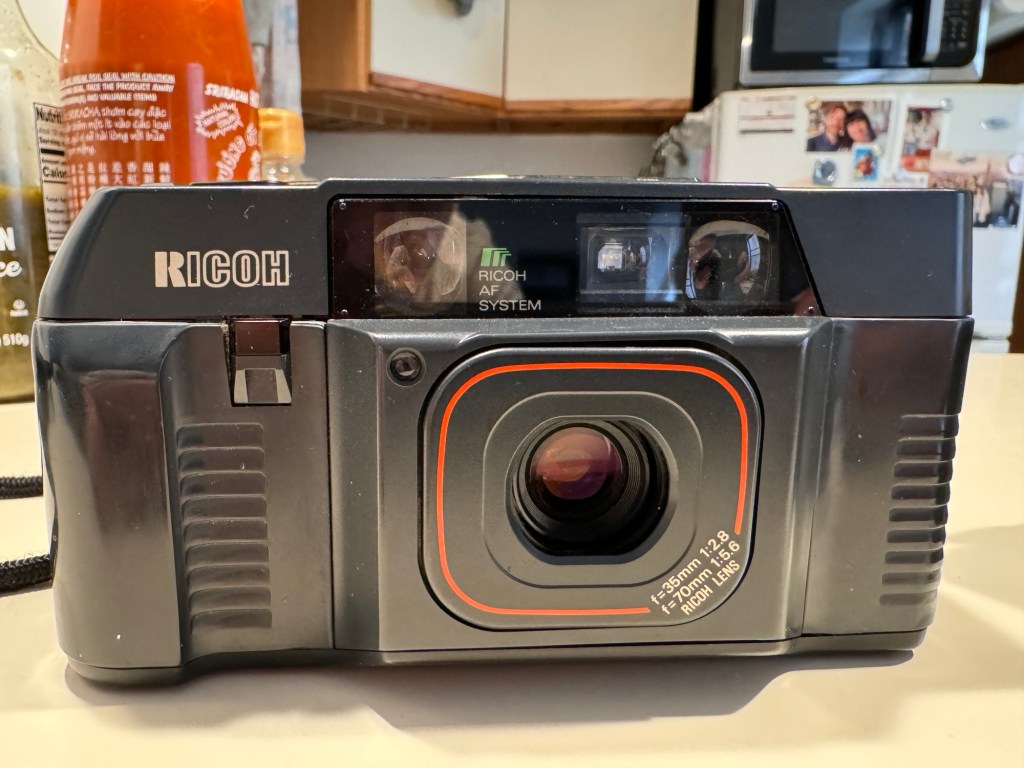
The Ricoh TF-500 (sample images) fits this 1980s aesthetic. It’s enormous for a point-and-shoot, nearly the size of a small SLR, though it is fairly lightweight. It has a unique zoom lens, where a single button toggles the focal length length between 35mm and 70mm. Side note: In my camera at least, using the latter length seems to wash out the images.
For me, it’s best feature is the way it is turned on: simply sliding the viewfinder cover to the left. This natural movement leaves your hands set to take a photo, unlike other cameras with small on/off buttons, and the camera itself is ready to shoot as soon as it is turned on.
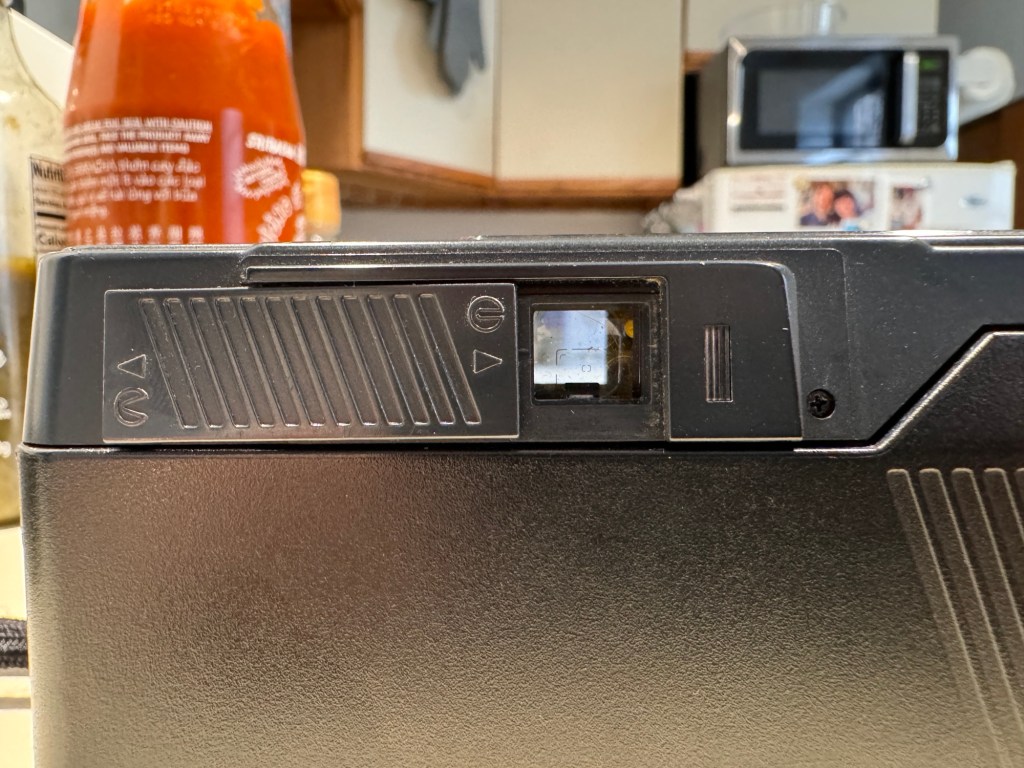
There’s not really much else to it. If it’s too dark, it has a popup flash. There’s an exposure compensation button that lightens up the image.
Prime (fixed) lenses seem to be the most popular point-and-shoots, as their photos are often clearer, which leads to rising prices and scarcity. This camera seems to be common and basic and is halfway between a prime and a zoom lens, which should guarantee its cheapness going forward.
Ricoh GR1 and GR IIIx
The original film versions of the Ricoh GR are beautiful. They are some of the smallest 35mm cameras ever made and they are finished with magnesium alloy bodies. The downside is that these GR cameras are now aging relics. The GR1v, Ricoh’s final non-digital point-and-shoot, was released in 2001. The GR series, unlike my TF-500, are known to have faulty LCD screens. That, and the price ($400-600 or more), told me to look elsewhere.
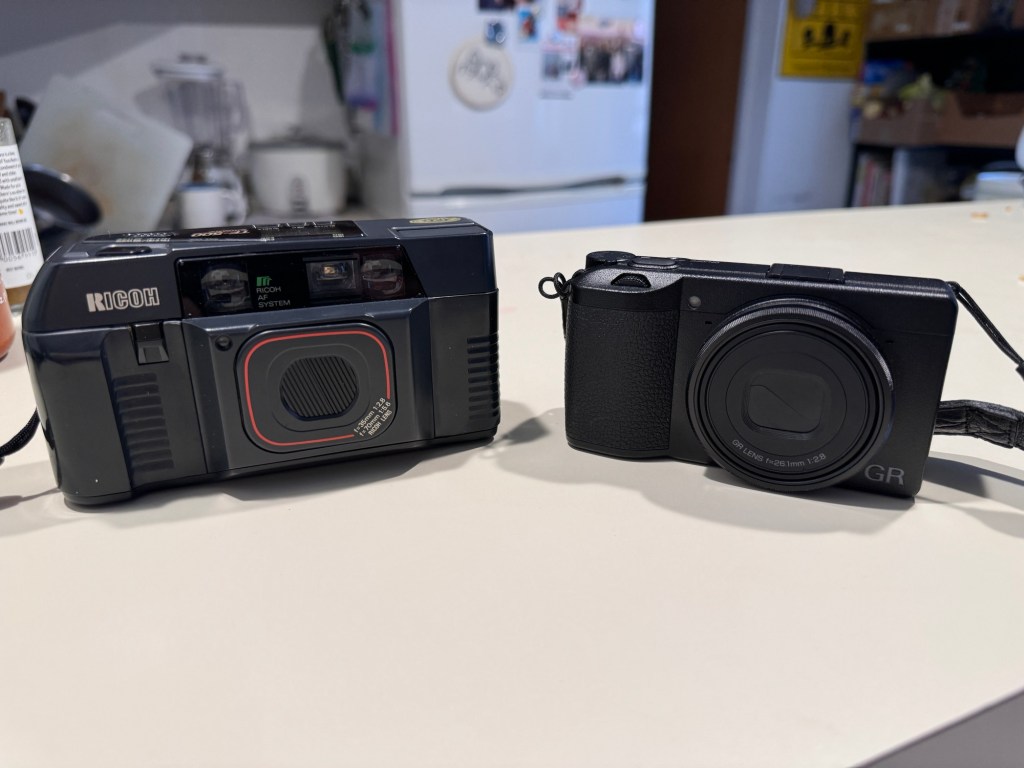
Ricoh continued the heritage of the GR with the GR digital series, picking up where the film cameras left off. The GR IIIx, the latest in the series, which I ultimately purchased, has a few unique features:
- IBIS (in-body image stabilization), which eliminates camera shake, allowing for very slow shutter speeds and night shooting, including great motion blur;
- Snap mode, which auto-focuses the camera, allowing quick shots with a press of the LCD screen;
- An APS-C sensor, same as the high-definition sensor on many larger and pricier mirrorless cameras;
- Great film simulations, including positive film and high-contrast B&W;
- A decent bluetooth/wifi-enabled image transfer app, ImageSync, which lets you move images to your iPhone; and
- Regular firmware upgrades to interface and camera modes, including snap distance priority mode.
It does have some drawbacks, mostly related to trying to fit a lot into a small package, primarily:
- Battery life, when running a LCD screen, high-powered sensor, and optional Bluetooth, is not great; and
- It has no built-in viewfinder nor flip-up screen, requiring a bit of guesswork when shooting in certain situations.
With more features comes more complexity. If anything, that is the one downside to the Ricoh GR IIIx and any new digital camera really. It was fun to watch videos like this one as part of the initial rush of excitement to set up the camera, but in the end, it’s all about feeling unconstrained while taking photos and enjoying the ultimate results.
Where / How to Purchase
The following are prices in 2023-2024:
- Ricoh TF-500, TF-500D, TF-900D and TF-550 cameras can be found on eBay, Mercari, Etsy and the like. Expect to pay $20-50;
- Ricoh GR-series film cameras (GR1, GR1s, GR1v) go for $400-1000 or more;
- Ricoh GR IIIx goes for $1000-1100, though I got mine factory refurbished direct from Ricoh for $750. You’ll notice that the price has since increased to $959 as of March 2026, still a significant discount off the $1250 retail price. (these offers appear on Ricoh’s page unannounced a few times a year. I bought mine on Thanksgiving).

 Hops Trains and Backpacks
Leave a comment